mylingo

Advance ㅇ

takeoff in Korean: 이륙’s meaning and pronunciation

takeoff in Korean is 이륙. For examples, you can use like [비행기 이륙, 이륙 명령]. In this post you will learn how to pronounce and use takeoff in Korean along with examples.
Advance ㅇ

career in Korean: 이력’s meaning and pronunciation

career in Korean is 이력. For examples, you can use like [화려한 이력, 이력 관리]. In this post you will learn how to pronounce and use career in Korean along with examples.
Advance ㅇ

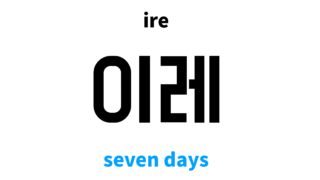
seven days in Korean: 이레’s meaning and pronunciation

seven days in Korean is 이레. For examples, you can use like [이레 동안, 이레가 걸리다]. In this post you will learn how to pronounce and use seven days in Korean along with examples.
Advance ㅇ

next year in Korean: 이듬해’s meaning and pronunciation

next year in Korean is 이듬해. For examples, you can use like [결혼한 이듬해, 이듬해 봄]. In this post you will learn how to pronounce and use next year in Korean along with examples.
Advance ㅇ

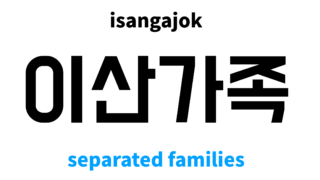
separated families in Korean: 이산가족’s meaning and pronunciation

separated families in Korean is 이산가족. For examples, you can use like [이산가족 문제, 이산가족 상봉]. In this post you will learn how to pronounce and use separated families in Korean along with examples.
Advance ㅇ

profit in Korean: 이득’s meaning and pronunciation

profit in Korean is 이득. For examples, you can use like [막대한 이득, 부당한 이득]. In this post you will learn how to pronounce and use profit in Korean along with examples.
Advance ㅇ

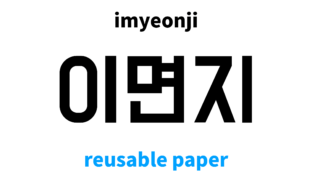
reusable paper in Korean: 이면지’s meaning and pronunciation

reusable paper in Korean is 이면지. For examples, you can use like [이면지 뒷장, 이면지 활용]. In this post you will learn how to pronounce and use reusable paper in Korean along with examples.
Advance ㅇ

being theoretical in Korean: 이론적’s meaning and pronunciation

being theoretical in Korean is 이론적. For examples, you can use like [이론적인 논의, 이론적인 문제]. In this post you will learn how to pronounce and use being theoretical in Korean along with examples.
Advance ㅇ

ideal type in Korean: 이상형’s meaning and pronunciation

ideal type in Korean is 이상형. For examples, you can use like [완벽한 이상형, 이상형을 만나다]. In this post you will learn how to pronounce and use ideal type in Korean along with examples.
Advance ㅇ

be famous in Korean: 이름나다’s meaning and pronunciation

be famous in Korean is 이름나다. For examples, you can use like [이름난 미인, 이름난 상품]. In this post you will learn how to pronounce and use be famous in Korean along with examples.
Copied title and URL