mylingo

Advance ㅇ

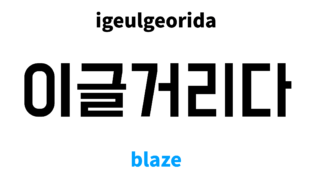
blaze in Korean: 이글거리다’s meaning and pronunciation

blaze in Korean is 이글거리다. For examples, you can use like [이글거리는 태양, 불길이 이글거리다]. In this post you will learn how to pronounce and use blaze in Korean along with examples.
Advance ㅇ

different opinions in Korean: 이견’s meaning and pronunciation

different opinions in Korean is 이견. For examples, you can use like [이견이 많다, 이견이 없다]. In this post you will learn how to pronounce and use different opinions in Korean along with examples.
Advance ㅇ

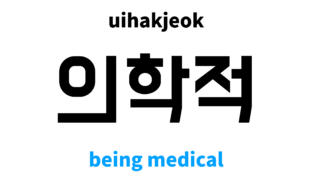
being medical in Korean: 의학적’s meaning and pronunciation

being medical in Korean is 의학적. For examples, you can use like [의학적인 대책, 의학적인 측면]. In this post you will learn how to pronounce and use being medical in Korean along with examples.
Advance ㅇ

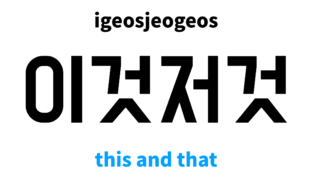
this and that in Korean: 이것저것’s meaning and pronunciation

this and that in Korean is 이것저것. For examples, you can use like [이것저것 걱정하다, 이것저것 건드리다]. In this post you will learn how to pronounce and use this and that in Korean along with examples.
Advance ㅇ

put on the head in Korean: 이다’s meaning and pronunciation

put on the head in Korean is 이다. For examples, you can use like [물통을 이다, 바구니를 이다]. In this post you will learn how to pronounce and use put on the head in Korean along with examples.
Advance ㅇ

person in Korean: 이’s meaning and pronunciation

person in Korean is 이. For examples, you can use like [지금 밖에 지나가는 이가 바로 내 사촌 동생이다, 영화가 시작되자 떠들던 이들도 모두 말을 멈추고 화면을 바라보았다]. In this post you will learn how to pronounce and use person in Korean along with examples.
Advance ㅇ

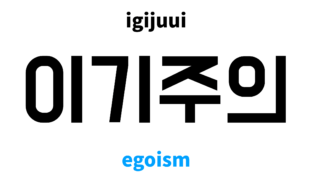
egoism in Korean: 이기주의’s meaning and pronunciation

egoism in Korean is 이기주의. For examples, you can use like [극단적인 이기주의, 이기주의가 만연하다]. In this post you will learn how to pronounce and use egoism in Korean along with examples.
Advance ㅇ

National Assembly in Korean: 의회’s meaning and pronunciation

National Assembly in Korean is 의회. For examples, you can use like [의회 의원, 의회 의장]. In this post you will learn how to pronounce and use National Assembly in Korean along with examples.
Advance ㅇ

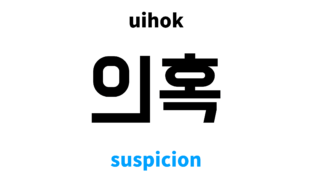
suspicion in Korean: 의혹’s meaning and pronunciation

suspicion in Korean is 의혹. For examples, you can use like [의혹이 생기다, 의혹이 제기되다]. In this post you will learn how to pronounce and use suspicion in Korean along with examples.
Advance ㅇ

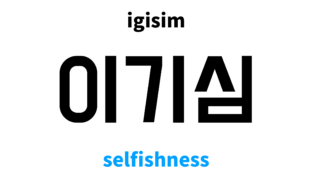
selfishness in Korean: 이기심’s meaning and pronunciation

selfishness in Korean is 이기심. For examples, you can use like [개인의 이기심, 이기심이 발로하다]. In this post you will learn how to pronounce and use selfishness in Korean along with examples.
Copied title and URL