mylingo

Advance ㅇ

destitute person in Korean: 영세민’s meaning and pronunciation

destitute person in Korean is 영세민. For examples, you can use like [도시 영세민, 영세민 대책]. In this post you will learn how to pronounce and use destitute person in Korean along with examples.
Advance ㅇ

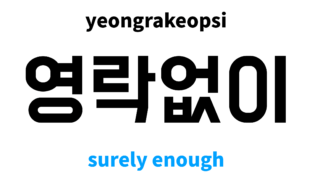
surely enough in Korean: 영락없이’s meaning and pronunciation

surely enough in Korean is 영락없이. For examples, you can use like [영락없이 똑같다, 영락없이 닮았다]. In this post you will learn how to pronounce and use surely enough in Korean along with examples.
Advance ㅇ

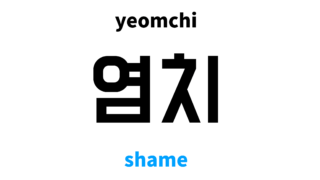
shame in Korean: 염치’s meaning and pronunciation

shame in Korean is 염치. For examples, you can use like [염치가 없다, 염치가 있다]. In this post you will learn how to pronounce and use shame in Korean along with examples.
Advance ㅇ

dietitian in Korean: 영양사’s meaning and pronunciation

dietitian in Korean is 영양사. For examples, you can use like [영양사 교육, 영양사 시험]. In this post you will learn how to pronounce and use dietitian in Korean along with examples.
Advance ㅇ

enthusiasm in Korean: 열의’s meaning and pronunciation

enthusiasm in Korean is 열의. For examples, you can use like [열의가 높다, 열의가 대단하다]. In this post you will learn how to pronounce and use enthusiasm in Korean along with examples.
Advance ㅇ

nutritional value in Korean: 영양가’s meaning and pronunciation

nutritional value in Korean is 영양가. For examples, you can use like [영양가가 높다, 영양가가 많다]. In this post you will learn how to pronounce and use nutritional value in Korean along with examples.
Advance ㅇ

inflammation in Korean: 염증’s meaning and pronunciation

inflammation in Korean is 염증. For examples, you can use like [상처의 염증, 염증이 가라앉다]. In this post you will learn how to pronounce and use inflammation in Korean along with examples.
Advance ㅇ

profit-seeking in Korean: 영리’s meaning and pronunciation

profit-seeking in Korean is 영리. For examples, you can use like [개인의 영리, 영리 목적]. In this post you will learn how to pronounce and use profit-seeking in Korean along with examples.
Advance ㅇ

glory in Korean: 영광’s meaning and pronunciation

glory in Korean is 영광. For examples, you can use like [가문의 영광, 수상의 영광]. In this post you will learn how to pronounce and use glory in Korean along with examples.
Advance ㅇ

reason in Korean: 영문’s meaning and pronunciation

reason in Korean is 영문. For examples, you can use like [영문이 궁금하다, 영문을 모르다]. In this post you will learn how to pronounce and use reason in Korean along with examples.

Copied title and URL