mylingo

Advance ㅂ

well up in Korean: 북받치다’s meaning and pronunciation

well up in Korean is 북받치다. For examples, you can use like [북받치는 감정, 북받치는 눈물]. In this post you will learn how to pronounce and use well up in Korean along with examples.
Advance ㅂ

distinguishment in Korean: 분간’s meaning and pronunciation

distinguishment in Korean is 분간. For examples, you can use like [분간이 가다, 분간이 되다]. In this post you will learn how to pronounce and use distinguishment in Korean along with examples.
Advance ㅂ

share in Korean: 분담’s meaning and pronunciation

share in Korean is 분담. For examples, you can use like [고통 분담, 노동 분담]. In this post you will learn how to pronounce and use share in Korean along with examples.
Advance ㅂ

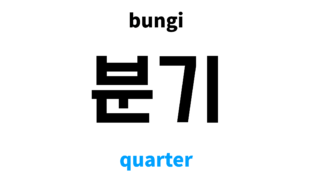
quarter in Korean: 분기’s meaning and pronunciation

quarter in Korean is 분기. For examples, you can use like [다음 분기, 이전 분기]. In this post you will learn how to pronounce and use quarter in Korean along with examples.
Advance ㅂ

anger in Korean: 분’s meaning and pronunciation

anger in Korean is 분. For examples, you can use like [분이 가시다, 분이 오르다]. In this post you will learn how to pronounce and use anger in Korean along with examples.
Advance ㅂ

bustle in Korean: 북적거리다’s meaning and pronunciation

bustle in Korean is 북적거리다. For examples, you can use like [북적거리는 곳, 북적거리는 길]. In this post you will learn how to pronounce and use bustle in Korean along with examples.
Advance ㅂ

proceeding to a new post in Korean: 부임’s meaning and pronunciation

proceeding to a new post in Korean is 부임. For examples, you can use like [부임 절차, 부임 통고]. In this post you will learn how to pronounce and use proceeding to a new post in Korean along with examples.
Advance ㅂ

satisfaction in Korean: 부응’s meaning and pronunciation

satisfaction in Korean is 부응. For examples, you can use like [부응을 하다, 부응을 못하다]. In this post you will learn how to pronounce and use satisfaction in Korean along with examples.
Advance ㅂ

weakness in Korean: 부실’s meaning and pronunciation

weakness in Korean is 부실. For examples, you can use like [부실 체력, 부실을 극복하다]. In this post you will learn how to pronounce and use weakness in Korean along with examples.
Advance ㅂ

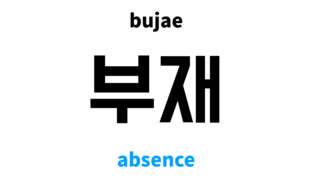
absence in Korean: 부재’s meaning and pronunciation

absence in Korean is 부재. For examples, you can use like [능력 부재, 지도력 부재]. In this post you will learn how to pronounce and use absence in Korean along with examples.
Copied title and URL