mylingo

Advance ㄷ

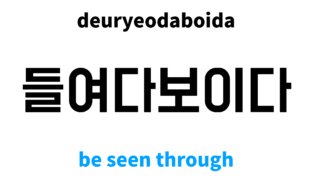
be seen through in Korean: 들여다보이다’s meaning and pronunciation

be seen through in Korean is 들여다보이다. For examples, you can use like [내부가 들여다보이는 집, 속살이 들여다보이는 옷]. In this post you will learn how to pronounce and use be seen through in Korean along with examples.
Advance ㄷ

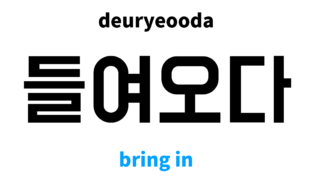
bring in in Korean: 들여오다’s meaning and pronunciation

bring in in Korean is 들여오다. For examples, you can use like [밥상을 들여오다, 술상을 들여오다]. In this post you will learn how to pronounce and use bring in in Korean along with examples.

Advance ㄷ

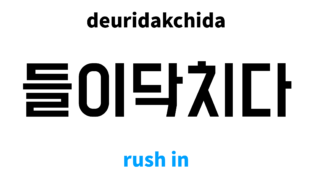
rush in in Korean: 들이닥치다’s meaning and pronunciation

rush in in Korean is 들이닥치다. For examples, you can use like [갑자기 들이닥친 폭우, 경찰들이 들이닥치다]. In this post you will learn how to pronounce and use rush in in Korean along with examples.
Advance ㄷ

stick in Korean: 들이밀다’s meaning and pronunciation

stick in Korean is 들이밀다. For examples, you can use like [고개를 들이밀다, 얼굴을 들이밀다]. In this post you will learn how to pronounce and use stick in Korean along with examples.
Advance ㄷ

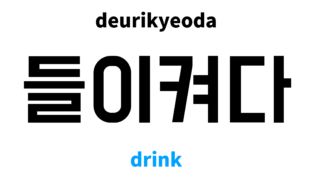
drink in Korean: 들이켜다’s meaning and pronunciation

drink in Korean is 들이켜다. For examples, you can use like [물을 들이켜다, 술을 들이켜다]. In this post you will learn how to pronounce and use drink in Korean along with examples.
Advance ㄷ

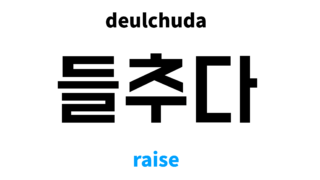
raise in Korean: 들추다’s meaning and pronunciation

raise in Korean is 들추다. For examples, you can use like [돌을 들추다, 보자기를 들추다]. In this post you will learn how to pronounce and use raise in Korean along with examples.
Advance ㄷ

be twisted in Korean: 뒤틀리다’s meaning and pronunciation

be twisted in Korean is 뒤틀리다. For examples, you can use like [뒤틀린 다리, 몸이 뒤틀리다]. In this post you will learn how to pronounce and use be twisted in Korean along with examples.
Advance ㄷ

backward step in Korean: 뒷걸음’s meaning and pronunciation

backward step in Korean is 뒷걸음. For examples, you can use like [뒷걸음을 걷다, 뒷걸음으로 가다]. In this post you will learn how to pronounce and use backward step in Korean along with examples.
Advance ㄷ

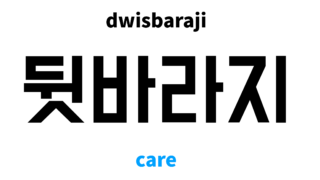
care in Korean: 뒷바라지’s meaning and pronunciation

care in Korean is 뒷바라지. For examples, you can use like [가족 뒷바라지, 남편 뒷바라지]. In this post you will learn how to pronounce and use care in Korean along with examples.
Advance ㄷ

support in Korean: 뒷받침’s meaning and pronunciation

support in Korean is 뒷받침. For examples, you can use like [부모의 뒷받침, 물질적인 뒷받침]. In this post you will learn how to pronounce and use support in Korean along with examples.
Copied title and URL