mylingo

Advance ㄷ

rummage in Korean: 뒤척이다’s meaning and pronunciation

rummage in Korean is 뒤척이다. For examples, you can use like [사진을 뒤척이다, 서류를 뒤척이다]. In this post you will learn how to pronounce and use rummage in Korean along with examples.
Advance ㄷ
the back of the head in Korean: 뒤통수’s meaning and pronunciation

the back of the head in Korean is 뒤통수. For examples, you can use like [뒤통수가 납작하다, 뒤통수가 잘생기다]. In this post you will learn how to pronounce and use the back of the head in Korean along with examples.
Advance ㄷ

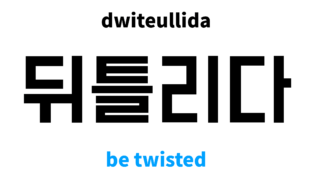
be twisted in Korean: 뒤틀리다’s meaning and pronunciation

be twisted in Korean is 뒤틀리다. For examples, you can use like [뒤틀린 다리, 몸이 뒤틀리다]. In this post you will learn how to pronounce and use be twisted in Korean along with examples.
Advance ㄷ

after party in Korean: 뒤풀이’s meaning and pronunciation

after party in Korean is 뒤풀이. For examples, you can use like [결혼식 뒤풀이, 공연 뒤풀이]. In this post you will learn how to pronounce and use after party in Korean along with examples.
Advance ㄷ

backward step in Korean: 뒷걸음’s meaning and pronunciation

backward step in Korean is 뒷걸음. For examples, you can use like [뒷걸음을 걷다, 뒷걸음으로 가다]. In this post you will learn how to pronounce and use backward step in Korean along with examples.
Advance ㄷ

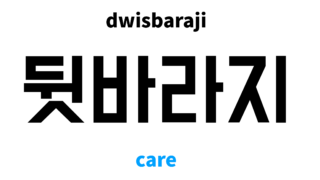
care in Korean: 뒷바라지’s meaning and pronunciation

care in Korean is 뒷바라지. For examples, you can use like [가족 뒷바라지, 남편 뒷바라지]. In this post you will learn how to pronounce and use care in Korean along with examples.
Advance ㄷ

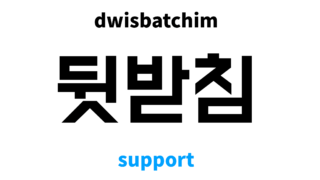
support in Korean: 뒷받침’s meaning and pronunciation

support in Korean is 뒷받침. For examples, you can use like [부모의 뒷받침, 물질적인 뒷받침]. In this post you will learn how to pronounce and use support in Korean along with examples.
Advance ㄷ

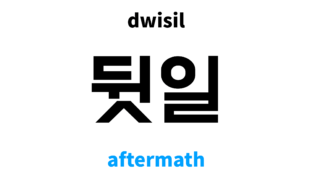
aftermath in Korean: 뒷일’s meaning and pronunciation

aftermath in Korean is 뒷일. For examples, you can use like [뒷일을 감당하다, 뒷일을 걱정하다]. In this post you will learn how to pronounce and use aftermath in Korean along with examples.
Advance ㄷ

back in Korean: 뒷전’s meaning and pronunciation

back in Korean is 뒷전. For examples, you can use like [배의 뒷전, 뒷전에 서다]. In this post you will learn how to pronounce and use back in Korean along with examples.
Advance ㄷ

roll over in Korean: 뒹굴다’s meaning and pronunciation

roll over in Korean is 뒹굴다. For examples, you can use like [운동장을 뒹굴다, 진흙탕을 뒹굴다]. In this post you will learn how to pronounce and use roll over in Korean along with examples.
Copied title and URL