mylingo

Advance ㄷ

round in Korean: 둥그렇다’s meaning and pronunciation

round in Korean is 둥그렇다. For examples, you can use like [둥그런 공, 둥그런 바위]. In this post you will learn how to pronounce and use round in Korean along with examples.
Advance ㄷ

shroud in Korean: 뒤덮다’s meaning and pronunciation

shroud in Korean is 뒤덮다. For examples, you can use like [건물을 뒤덮은 담쟁이덩굴, 산을 뒤덮은 눈]. In this post you will learn how to pronounce and use shroud in Korean along with examples.
Advance ㄷ

be shrouded in Korean: 뒤덮이다’s meaning and pronunciation

be shrouded in Korean is 뒤덮이다. For examples, you can use like [꽃으로 뒤덮인 산, 눈으로 뒤덮인 세상]. In this post you will learn how to pronounce and use be shrouded in Korean along with examples.
Advance ㄷ

look back in Korean: 뒤돌아보다’s meaning and pronunciation

look back in Korean is 뒤돌아보다. For examples, you can use like [휙 뒤돌아보다 힐끗 뒤돌아보다 깜짝 놀라 뒤돌아보다 걷다가 뒤돌아보다 걸음을 멈추고 뒤돌아보다, 선생님은 문을 닫고 나가려다 말고 뒤돌아보며 말씀을 하셨다]. In this post you will learn how to pronounce and use look back in Korean along with examples.
Advance ㄷ

be reversed in Korean: 뒤바뀌다’s meaning and pronunciation

be reversed in Korean is 뒤바뀌다. For examples, you can use like [선후가 뒤바뀌다, 순서가 뒤바뀌다]. In this post you will learn how to pronounce and use be reversed in Korean along with examples.
Advance ㄷ

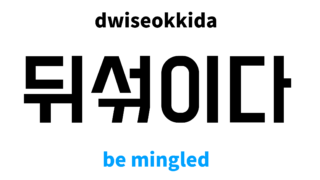
be mingled in Korean: 뒤섞이다’s meaning and pronunciation

be mingled in Korean is 뒤섞이다. For examples, you can use like [감격과 슬픔이 뒤섞이다, 꿈과 현실이 뒤섞이다]. In this post you will learn how to pronounce and use be mingled in Korean along with examples.
Advance ㄷ

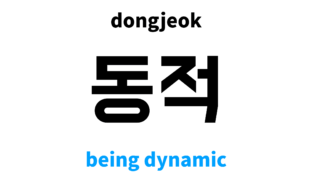
being dynamic in Korean: 동적’s meaning and pronunciation

being dynamic in Korean is 동적. For examples, you can use like [동적인 묘사, 동적인 사회]. In this post you will learn how to pronounce and use being dynamic in Korean along with examples.
Advance ㄷ

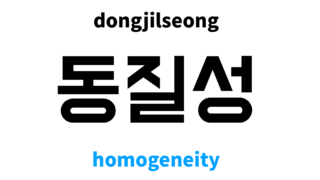
homogeneity in Korean: 동질성’s meaning and pronunciation

homogeneity in Korean is 동질성. For examples, you can use like [문화적 동질성, 민족적 동질성]. In this post you will learn how to pronounce and use homogeneity in Korean along with examples.
Advance ㄷ

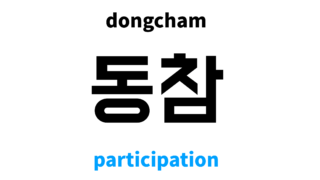
participation in Korean: 동참’s meaning and pronunciation

participation in Korean is 동참. For examples, you can use like [시민들의 동참, 적극적인 동참]. In this post you will learn how to pronounce and use participation in Korean along with examples.
Advance ㄷ

accompanying in Korean: 동행’s meaning and pronunciation

accompanying in Korean is 동행. For examples, you can use like [동행 기간, 동행 취재]. In this post you will learn how to pronounce and use accompanying in Korean along with examples.
Copied title and URL