mylingo

Advance ㄴ

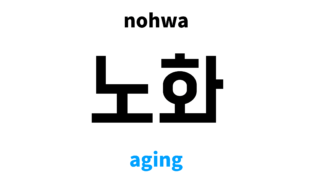
aging in Korean: 노화’s meaning and pronunciation

aging in Korean is 노화. For examples, you can use like [피부 노화, 노화 현상]. In this post you will learn how to pronounce and use aging in Korean along with examples.
Advance ㄴ
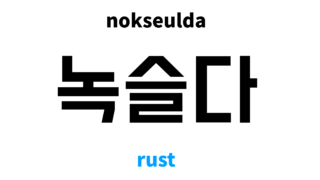
rust in Korean: 녹슬다’s meaning and pronunciation

rust in Korean is 녹슬다. For examples, you can use like [녹슨 기찻길, 녹슨 못]. In this post you will learn how to pronounce and use rust in Korean along with examples.
Advance ㄴ

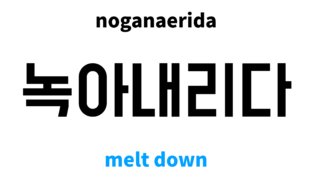
melt down in Korean: 녹아내리다’s meaning and pronunciation

melt down in Korean is 녹아내리다. For examples, you can use like [고드름이 녹아내리다, 눈이 녹아내리다]. In this post you will learn how to pronounce and use melt down in Korean along with examples.
Advance ㄴ

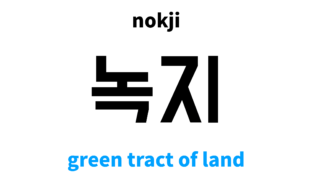
green tract of land in Korean: 녹지’s meaning and pronunciation

green tract of land in Korean is 녹지. For examples, you can use like [공원 녹지, 녹지 공간]. In this post you will learn how to pronounce and use green tract of land in Korean along with examples.
Advance ㄴ

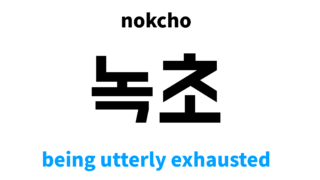
being utterly exhausted in Korean: 녹초’s meaning and pronunciation

being utterly exhausted in Korean is 녹초. For examples, you can use like [녹초가 되다, 녹초로 만들다]. In this post you will learn how to pronounce and use being utterly exhausted in Korean along with examples.
Advance ㄴ

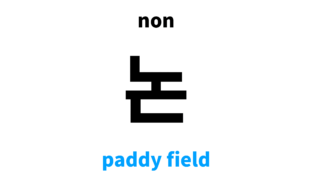
paddy field in Korean: 논’s meaning and pronunciation

paddy field in Korean is 논. For examples, you can use like [기름진 논, 논 한 마지기]. In this post you will learn how to pronounce and use paddy field in Korean along with examples.
Advance ㄴ

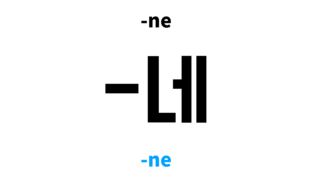
-ne in Korean: -네’s meaning and pronunciation

-ne in Korean is -네. For examples, you can use like [남정네, 동갑네]. In this post you will learn how to pronounce and use -ne in Korean along with examples.
Advance ㄴ

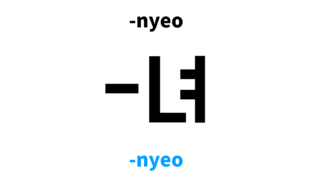
-nyeo in Korean: -녀’s meaning and pronunciation

-nyeo in Korean is -녀. For examples, you can use like [독신녀, 동정녀]. In this post you will learn how to pronounce and use -nyeo in Korean along with examples.
Advance ㄴ

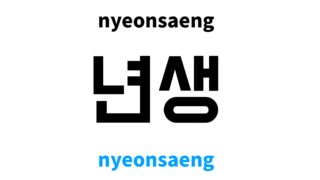
nyeonsaeng in Korean: 년생’s meaning and pronunciation

nyeonsaeng in Korean is 년생. For examples, you can use like [삼 년생, 이 년생]. In this post you will learn how to pronounce and use nyeonsaeng in Korean along with examples.
Advance ㄴ

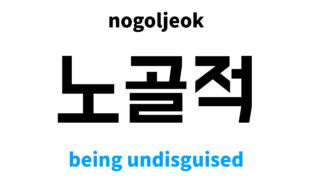
being undisguised in Korean: 노골적’s meaning and pronunciation

being undisguised in Korean is 노골적. For examples, you can use like [노골적인 말투, 노골적인 어투]. In this post you will learn how to pronounce and use being undisguised in Korean along with examples.
Copied title and URL