mylingo

Advance ㄴ

gender equality in Korean: 남녀평등’s meaning and pronunciation

gender equality in Korean is 남녀평등. For examples, you can use like [남녀평등 사회, 남녀평등 의식]. In this post you will learn how to pronounce and use gender equality in Korean along with examples.

Advance ㄴ

uncommon in Korean: 남다르다’s meaning and pronunciation

uncommon in Korean is 남다르다. For examples, you can use like [남다른 관심, 남다른 감각]. In this post you will learn how to pronounce and use uncommon in Korean along with examples.
Advance ㄴ

secretly in Korean: 남몰래’s meaning and pronunciation

secretly in Korean is 남몰래. For examples, you can use like [남몰래 간직하다, 남몰래 고민하다]. In this post you will learn how to pronounce and use secretly in Korean along with examples.

Advance ㄴ

deep blue in Korean: 남색’s meaning and pronunciation

deep blue in Korean is 남색. For examples, you can use like [밝은 남색, 짙은 남색]. In this post you will learn how to pronounce and use deep blue in Korean along with examples.

Advance ㄴ

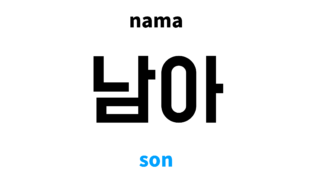
son in Korean: 남아’s meaning and pronunciation

son in Korean is 남아. For examples, you can use like [남아 선호 사상, 남아가 태어나다]. In this post you will learn how to pronounce and use son in Korean along with examples.
Advance ㄴ

abuse in Korean: 남용’s meaning and pronunciation

abuse in Korean is 남용. For examples, you can use like [약물 남용, 자원의 남용]. In this post you will learn how to pronounce and use abuse in Korean along with examples.
Advance ㄴ

-nan in Korean: -난’s meaning and pronunciation

-nan in Korean is -난. For examples, you can use like [경제난, 교통난]. In this post you will learn how to pronounce and use -nan in Korean along with examples.
Advance ㄴ

being at a loss in Korean: 난감하다’s meaning and pronunciation

being at a loss in Korean is 난감하다. For examples, you can use like [난감한 경우, 난감한 기분]. In this post you will learn how to pronounce and use being at a loss in Korean along with examples.
Advance ㄴ

difficult situation in Korean: 난관’s meaning and pronunciation

difficult situation in Korean is 난관. For examples, you can use like [난관이 생기다, 난관이 예상되다]. In this post you will learn how to pronounce and use difficult situation in Korean along with examples.
Advance ㄴ

all of a sudden in Korean: 난데없이’s meaning and pronunciation

all of a sudden in Korean is 난데없이. For examples, you can use like [난데없이 끼어들다, 난데없이 나타나다]. In this post you will learn how to pronounce and use all of a sudden in Korean along with examples.
Copied title and URL