mylingo

Advance ㄱ

interested party in Korean: 관련자’s meaning and pronunciation

interested party in Korean is 관련자. For examples, you can use like [사건 관련자, 관련자를 고소하다]. In this post you will learn how to pronounce and use interested party in Korean along with examples.

Advance ㄱ

relate in Korean: 관련짓다’s meaning and pronunciation

relate in Korean is 관련짓다. For examples, you can use like [관련지어 논의되다, 관련지어 말하다]. In this post you will learn how to pronounce and use relate in Korean along with examples.
Advance ㄱ

bureaucrat in Korean: 관료’s meaning and pronunciation

bureaucrat in Korean is 관료. For examples, you can use like [경제 관료, 고위 관료]. In this post you will learn how to pronounce and use bureaucrat in Korean along with examples.
Advance ㄱ

civil servant in Korean: 관리’s meaning and pronunciation

civil servant in Korean is 관리. For examples, you can use like [고급 관리, 고위 관리]. In this post you will learn how to pronounce and use civil servant in Korean along with examples.
Advance ㄱ

tariffs in Korean: 관세’s meaning and pronunciation

tariffs in Korean is 관세. For examples, you can use like [관세 대상, 관세 부과]. In this post you will learn how to pronounce and use tariffs in Korean along with examples.
Advance ㄱ

custom in Korean: 관습’s meaning and pronunciation

custom in Korean is 관습. For examples, you can use like [나쁜 관습, 지방 관습]. In this post you will learn how to pronounce and use custom in Korean along with examples.
Advance ㄱ

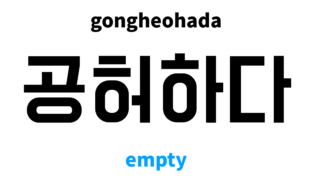
empty in Korean: 공허하다’s meaning and pronunciation

empty in Korean is 공허하다. For examples, you can use like [공허한 느낌, 공허한 들판]. In this post you will learn how to pronounce and use empty in Korean along with examples.

Advance ㄱ

contribution in Korean: 공헌’s meaning and pronunciation

contribution in Korean is 공헌. For examples, you can use like [뛰어난 공헌, 많은 공헌]. In this post you will learn how to pronounce and use contribution in Korean along with examples.

Advance ㄱ

overvaluation in Korean: 과대평가’s meaning and pronunciation

overvaluation in Korean is 과대평가. For examples, you can use like [능력의 과대평가, 지나친 과대평가]. In this post you will learn how to pronounce and use overvaluation in Korean along with examples.
Advance ㄱ

excessive in Korean: 과도하다’s meaning and pronunciation

excessive in Korean is 과도하다. For examples, you can use like [과도한 경쟁, 과도한 다이어트]. In this post you will learn how to pronounce and use excessive in Korean along with examples.
Copied title and URL