mylingo

Advance ㄱ

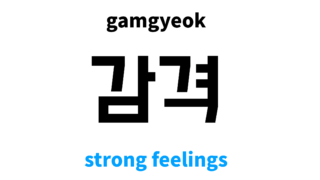
strong feelings in Korean: 감격’s meaning and pronunciation

strong feelings in Korean is 감격. For examples, you can use like [벅찬 감격, 감격의 눈물]. In this post you will learn how to pronounce and use strong feelings in Korean along with examples.
Advance ㄱ

impressed in Korean: 감격스럽다’s meaning and pronunciation

impressed in Korean is 감격스럽다. For examples, you can use like [감격스러운 모습, 감격스러운 목소리]. In this post you will learn how to pronounce and use impressed in Korean along with examples.
Advance ㄱ

confinement in Korean: 감금’s meaning and pronunciation

confinement in Korean is 감금. For examples, you can use like [불법 감금, 감금 사건]. In this post you will learn how to pronounce and use confinement in Korean along with examples.
Advance ㄱ

coping with in Korean: 감당’s meaning and pronunciation

coping with in Korean is 감당. For examples, you can use like [비용 감당, 사명 감당]. In this post you will learn how to pronounce and use coping with in Korean along with examples.
Advance ㄱ

hang in Korean: 감돌다’s meaning and pronunciation

hang in Korean is 감돌다. For examples, you can use like [산허리를 감돌다, 주변을 감돌다]. In this post you will learn how to pronounce and use hang in Korean along with examples.
Advance ㄱ

weight reduction in Korean: 감량’s meaning and pronunciation

weight reduction in Korean is 감량. For examples, you can use like [체중 감량, 감량 계획]. In this post you will learn how to pronounce and use weight reduction in Korean along with examples.
Advance ㄱ

reduction in Korean: 감면’s meaning and pronunciation

reduction in Korean is 감면. For examples, you can use like [세금 감면, 요금 감면]. In this post you will learn how to pronounce and use reduction in Korean along with examples.
Advance ㄱ

sweet in Korean: 감미롭다’s meaning and pronunciation

sweet in Korean is 감미롭다. For examples, you can use like [감미로운 과일, 감미로운 맛]. In this post you will learn how to pronounce and use sweet in Korean along with examples.
Advance ㄱ

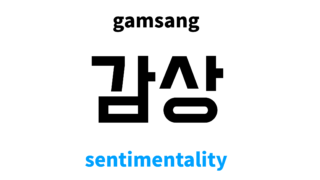
sentimentality in Korean: 감상’s meaning and pronunciation

sentimentality in Korean is 감상. For examples, you can use like [감상의 눈물, 감상이 들다]. In this post you will learn how to pronounce and use sentimentality in Korean along with examples.
Advance ㄱ

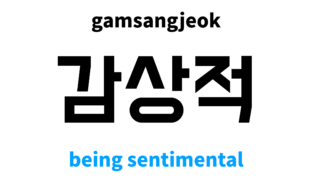
being sentimental in Korean: 감상적’s meaning and pronunciation

being sentimental in Korean is 감상적. For examples, you can use like [감상적인 기분, 감상적인 노래]. In this post you will learn how to pronounce and use being sentimental in Korean along with examples.
Copied title and URL