mylingo

Intermediate Words

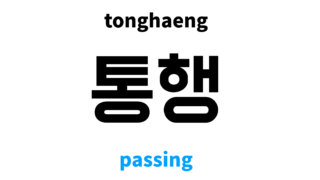
passing in Korean: 통행’s meaning and pronunciation

passing in Korean is 통행. For examples, you can use like [차량 통행, 자유로운 통행]. In this post you will learn how to pronounce and use passing in Korean along with examples.
Intermediate Words
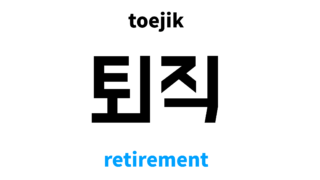
retirement in Korean: 퇴직’s meaning and pronunciation

retirement in Korean is 퇴직. For examples, you can use like [권고 퇴직, 퇴직 공무원]. In this post you will learn how to pronounce and use retirement in Korean along with examples.
Intermediate Words

investment in Korean: 투자’s meaning and pronunciation

investment in Korean is 투자. For examples, you can use like [교육 투자, 부동산 투자]. In this post you will learn how to pronounce and use investment in Korean along with examples.
Intermediate Words

vote in Korean: 투표’s meaning and pronunciation

vote in Korean is 투표. For examples, you can use like [주민 투표, 투표 결과]. In this post you will learn how to pronounce and use vote in Korean along with examples.
Intermediate Words

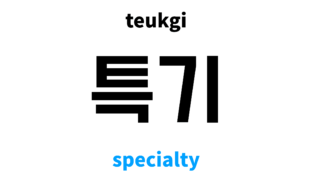
specialty in Korean: 특기’s meaning and pronunciation

specialty in Korean is 특기. For examples, you can use like [숨겨진 특기, 특기 사항]. In this post you will learn how to pronounce and use specialty in Korean along with examples.
Intermediate Words

characteristic in Korean: 특성’s meaning and pronunciation

characteristic in Korean is 특성. For examples, you can use like [인간의 특성, 신체적 특성]. In this post you will learn how to pronounce and use characteristic in Korean along with examples.
Intermediate Words

being unusual in Korean: 특수’s meaning and pronunciation

being unusual in Korean is 특수. For examples, you can use like [특수 기능, 특수 문자]. In this post you will learn how to pronounce and use being unusual in Korean along with examples.
Intermediate Words

being specific in Korean: 특정’s meaning and pronunciation

being specific in Korean is 특정. For examples, you can use like [특정 계층, 특정 세력]. In this post you will learn how to pronounce and use being specific in Korean along with examples.
Intermediate Words

distinct characteristic in Korean: 특징’s meaning and pronunciation

distinct characteristic in Korean is 특징. For examples, you can use like [남다른 특징, 독특한 특징]. In this post you will learn how to pronounce and use distinct characteristic in Korean along with examples.
Intermediate Words

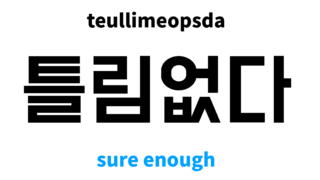
sure enough in Korean: 틀림없다’s meaning and pronunciation

sure enough in Korean is 틀림없다. For examples, you can use like [틀림없는 기록, 틀림없는 사실]. In this post you will learn how to pronounce and use sure enough in Korean along with examples.
Copied title and URL