mylingo

Intermediate Words

parting in Korean: 이별’s meaning and pronunciation

parting in Korean is 이별. For examples, you can use like [아내와의 이별, 영원한 이별]. In this post you will learn how to pronounce and use parting in Korean along with examples.
Intermediate Words

otorhinolaryngology in Korean: 이비인후과’s meaning and pronunciation

otorhinolaryngology in Korean is 이비인후과. For examples, you can use like [이비인후과 의사, 이비인후과 전문의]. In this post you will learn how to pronounce and use otorhinolaryngology in Korean along with examples.
Intermediate Words

being ideal in Korean: 이상적’s meaning and pronunciation

being ideal in Korean is 이상적. For examples, you can use like [이상적인 사회, 이상적인 상태]. In this post you will learn how to pronounce and use being ideal in Korean along with examples.
Intermediate Words

reason in Korean: 이성’s meaning and pronunciation

reason in Korean is 이성. For examples, you can use like [냉철한 이성, 이성의 역할]. In this post you will learn how to pronounce and use reason in Korean along with examples.
Intermediate Words

sequentially in Korean: 이어’s meaning and pronunciation

sequentially in Korean is 이어. For examples, you can use like [이어 걷다, 이어 공부하다]. In this post you will learn how to pronounce and use sequentially in Korean along with examples.
Intermediate Words

be connected in Korean: 이어지다’s meaning and pronunciation

be connected in Korean is 이어지다. For examples, you can use like [이어진 밧줄, 아래로 이어지다]. In this post you will learn how to pronounce and use be connected in Korean along with examples.
Intermediate Words

former times in Korean: 이왕’s meaning and pronunciation

former times in Korean is 이왕. For examples, you can use like [이왕의 사건, 이왕의 인연]. In this post you will learn how to pronounce and use former times in Korean along with examples.
Intermediate Words

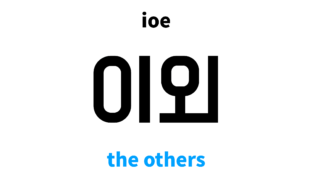
the others in Korean: 이외’s meaning and pronunciation

the others in Korean is 이외. For examples, you can use like [자신 이외, 이외의 것]. In this post you will learn how to pronounce and use the others in Korean along with examples.
Intermediate Words

user in Korean: 이용자’s meaning and pronunciation

user in Korean is 이용자. For examples, you can use like [이용자 부담, 이용자의 편의]. In this post you will learn how to pronounce and use user in Korean along with examples.
Intermediate Words

neighbor in Korean: 이웃집’s meaning and pronunciation

neighbor in Korean is 이웃집. For examples, you can use like [이웃집 담장, 이웃집 딸]. In this post you will learn how to pronounce and use neighbor in Korean along with examples.
Copied title and URL