mylingo

Intermediate Words

consolation in Korean: 위로’s meaning and pronunciation

consolation in Korean is 위로. For examples, you can use like [따뜻한 위로, 위로의 말]. In this post you will learn how to pronounce and use consolation in Korean along with examples.

Intermediate Words

violation in Korean: 위반’s meaning and pronunciation

violation in Korean is 위반. For examples, you can use like [공약 위반, 규제 위반]. In this post you will learn how to pronounce and use violation in Korean along with examples.
Intermediate Words

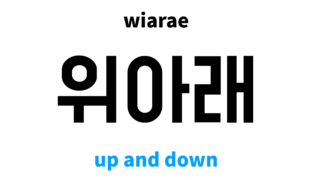
up and down in Korean: 위아래’s meaning and pronunciation

up and down in Korean is 위아래. For examples, you can use like [위아래가 같다, 위아래가 바뀌다]. In this post you will learn how to pronounce and use up and down in Korean along with examples.

Intermediate Words

committee in Korean: 위원회’s meaning and pronunciation

committee in Korean is 위원회. For examples, you can use like [조직 위원회, 집행 위원회]. In this post you will learn how to pronounce and use committee in Korean along with examples.
Intermediate Words

upper floor in Korean: 위층’s meaning and pronunciation

upper floor in Korean is 위층. For examples, you can use like [위층 방, 위층 집]. In this post you will learn how to pronounce and use upper floor in Korean along with examples.
Intermediate Words

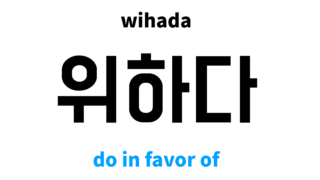
do in favor of in Korean: 위하다’s meaning and pronunciation

do in favor of in Korean is 위하다. For examples, you can use like [관광객을 위한 시설, 장애인을 위한 계단]. In this post you will learn how to pronounce and use do in favor of in Korean along with examples.
Intermediate Words

peril in Korean: 위험성’s meaning and pronunciation

peril in Korean is 위험성. For examples, you can use like [붕괴 위험성, 사고 위험성]. In this post you will learn how to pronounce and use peril in Korean along with examples.
Intermediate Words

threat in Korean: 위협’s meaning and pronunciation

threat in Korean is 위협. For examples, you can use like [생명의 위협, 전쟁의 위협]. In this post you will learn how to pronounce and use threat in Korean along with examples.
Intermediate Words

one’s senior in Korean: 윗사람’s meaning and pronunciation

one's senior in Korean is 윗사람. For examples, you can use like [윗사람이 되다, 윗사람을 따르다]. In this post you will learn how to pronounce and use one's senior in Korean along with examples.
Intermediate Words

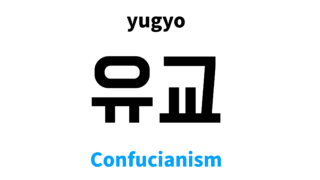
Confucianism in Korean: 유교’s meaning and pronunciation

Confucianism in Korean is 유교. For examples, you can use like [유교 문화, 유교 사상]. In this post you will learn how to pronounce and use Confucianism in Korean along with examples.
Copied title and URL