mylingo

Intermediate Words

movement in Korean: 움직임’s meaning and pronunciation

movement in Korean is 움직임. For examples, you can use like [사람의 움직임, 카메라의 움직임]. In this post you will learn how to pronounce and use movement in Korean along with examples.
Intermediate Words

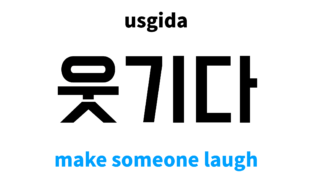
make someone laugh in Korean: 웃기다’s meaning and pronunciation

make someone laugh in Korean is 웃기다. For examples, you can use like [웃기는 내용, 웃기는 이야기]. In this post you will learn how to pronounce and use make someone laugh in Korean along with examples.

Intermediate Words

elders in Korean: 웃어른’s meaning and pronunciation

elders in Korean is 웃어른. For examples, you can use like [웃어른 앞, 웃어른의 말씀]. In this post you will learn how to pronounce and use elders in Korean along with examples.
Intermediate Words

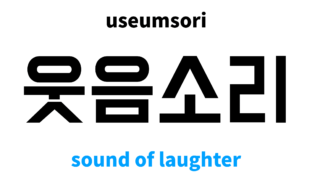
sound of laughter in Korean: 웃음소리’s meaning and pronunciation

sound of laughter in Korean is 웃음소리. For examples, you can use like [경쾌한 웃음소리, 유쾌한 웃음소리]. In this post you will learn how to pronounce and use sound of laughter in Korean along with examples.
Intermediate Words

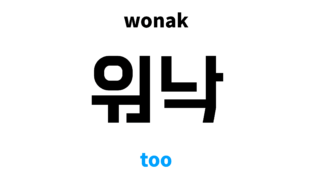
too in Korean: 워낙’s meaning and pronunciation

too in Korean is 워낙. For examples, you can use like [워낙 급하다, 워낙 두껍다]. In this post you will learn how to pronounce and use too in Korean along with examples.
Intermediate Words

circle in Korean: 원’s meaning and pronunciation

circle in Korean is 원. For examples, you can use like [원 꼴, 원 모양]. In this post you will learn how to pronounce and use circle in Korean along with examples.
Intermediate Words

origin in Korean: 원래’s meaning and pronunciation

origin in Korean is 원래. For examples, you can use like [원래의 가격, 원래의 계획]. In this post you will learn how to pronounce and use origin in Korean along with examples.
Intermediate Words

studio in Korean: 원룸’s meaning and pronunciation

studio in Korean is 원룸. For examples, you can use like [넓은 원룸, 원룸을 빌리다]. In this post you will learn how to pronounce and use studio in Korean along with examples.
Intermediate Words

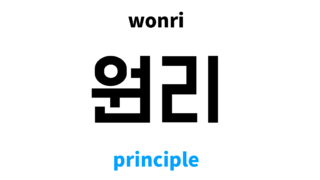
principle in Korean: 원리’s meaning and pronunciation

principle in Korean is 원리. For examples, you can use like [우주의 원리, 음양의 원리]. In this post you will learn how to pronounce and use principle in Korean along with examples.
Intermediate Words

mild in Korean: 원만하다’s meaning and pronunciation

mild in Korean is 원만하다. For examples, you can use like [원만한 분위기, 원만한 인품]. In this post you will learn how to pronounce and use mild in Korean along with examples.
Copied title and URL