mylingo

Intermediate Words

outer garment in Korean: 외투’s meaning and pronunciation

outer garment in Korean is 외투. For examples, you can use like [겨울 외투, 외투 자락]. In this post you will learn how to pronounce and use outer garment in Korean along with examples.
Intermediate Words

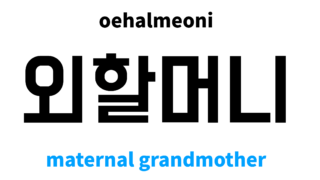
maternal grandmother in Korean: 외할머니’s meaning and pronunciation

maternal grandmother in Korean is 외할머니. For examples, you can use like [외할머니 댁, 외할머니 말씀]. In this post you will learn how to pronounce and use maternal grandmother in Korean along with examples.
Intermediate Words

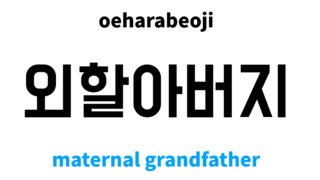
maternal grandfather in Korean: 외할아버지’s meaning and pronunciation

maternal grandfather in Korean is 외할아버지. For examples, you can use like [외할아버지 댁, 외할아버지 생신]. In this post you will learn how to pronounce and use maternal grandfather in Korean along with examples.
Intermediate Words

left foot in Korean: 왼발’s meaning and pronunciation

left foot in Korean is 왼발. For examples, you can use like [왼발이 아프다, 왼발이 크다]. In this post you will learn how to pronounce and use left foot in Korean along with examples.

Intermediate Words

left side in Korean: 왼편’s meaning and pronunciation

left side in Korean is 왼편. For examples, you can use like [왼편 가슴, 왼편 건물]. In this post you will learn how to pronounce and use left side in Korean along with examples.
Intermediate Words

mattress in Korean: 요’s meaning and pronunciation

mattress in Korean is 요. For examples, you can use like [이불과 요, 요를 개다]. In this post you will learn how to pronounce and use mattress in Korean along with examples.
Intermediate Words

completion in Korean: 완성’s meaning and pronunciation

completion in Korean is 완성. For examples, you can use like [완성 단계, 완성이 되다]. In this post you will learn how to pronounce and use completion in Korean along with examples.
Intermediate Words

completeness in Korean: 완전’s meaning and pronunciation

completeness in Korean is 완전. For examples, you can use like [완전 개방, 완전 합의]. In this post you will learn how to pronounce and use completeness in Korean along with examples.
Intermediate Words

going and returning in Korean: 왕복’s meaning and pronunciation

going and returning in Korean is 왕복. For examples, you can use like [왕복 여비, 왕복 열차]. In this post you will learn how to pronounce and use going and returning in Korean along with examples.
Intermediate Words

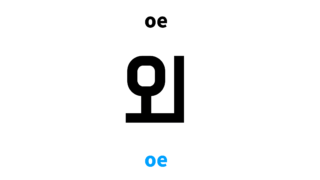
oe in Korean: 외’s meaning and pronunciation

oe in Korean is 외. For examples, you can use like [방법 외, 생각 외]. In this post you will learn how to pronounce and use oe in Korean along with examples.
Copied title and URL