mylingo

Intermediate Words

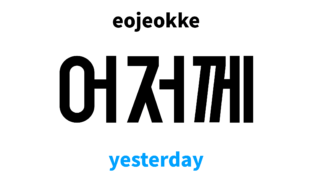
yesterday in Korean: 어저께’s meaning and pronunciation

yesterday in Korean is 어저께. For examples, you can use like [어저께 아침, 어저께의 일]. In this post you will learn how to pronounce and use yesterday in Korean along with examples.

Intermediate Words

dizzy in Korean: 어지럽다’s meaning and pronunciation

dizzy in Korean is 어지럽다. For examples, you can use like [눈이 어지럽다, 머리가 어지럽다]. In this post you will learn how to pronounce and use dizzy in Korean along with examples.
Intermediate Words

somehow in Korean: 어쩐지’s meaning and pronunciation

somehow in Korean is 어쩐지. For examples, you can use like [어쩐지 불안하다, 어쩐지 어색하다]. In this post you will learn how to pronounce and use somehow in Korean along with examples.

Intermediate Words

in any case in Korean: 어차피’s meaning and pronunciation

in any case in Korean is 어차피. For examples, you can use like [어차피 모자라다, 어차피 버리다]. In this post you will learn how to pronounce and use in any case in Korean along with examples.
Intermediate Words

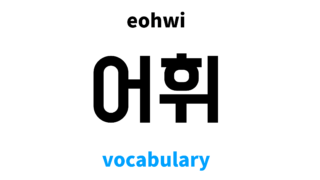
vocabulary in Korean: 어휘’s meaning and pronunciation

vocabulary in Korean is 어휘. For examples, you can use like [다양한 어휘, 풍부한 어휘]. In this post you will learn how to pronounce and use vocabulary in Korean along with examples.
Intermediate Words

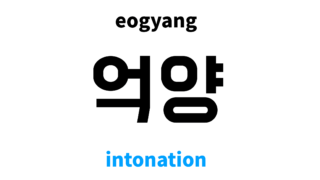
intonation in Korean: 억양’s meaning and pronunciation

intonation in Korean is 억양. For examples, you can use like [단어 억양, 문장 억양]. In this post you will learn how to pronounce and use intonation in Korean along with examples.
Intermediate Words

concession in Korean: 양보’s meaning and pronunciation

concession in Korean is 양보. For examples, you can use like [자리 양보, 양보를 하다]. In this post you will learn how to pronounce and use concession in Korean along with examples.
Intermediate Words

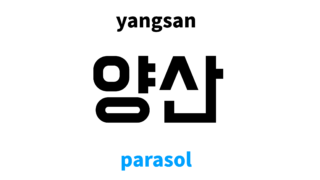
parasol in Korean: 양산’s meaning and pronunciation

parasol in Korean is 양산. For examples, you can use like [양산을 쓰다, 양산을 접다]. In this post you will learn how to pronounce and use parasol in Korean along with examples.
Intermediate Words

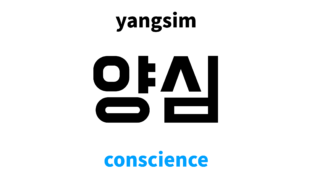
conscience in Korean: 양심’s meaning and pronunciation

conscience in Korean is 양심. For examples, you can use like [양심의 가책, 양심을 가지다]. In this post you will learn how to pronounce and use conscience in Korean along with examples.
Intermediate Words

both sides in Korean: 양옆’s meaning and pronunciation

both sides in Korean is 양옆. For examples, you can use like [길 양옆, 좌우 양옆]. In this post you will learn how to pronounce and use both sides in Korean along with examples.
Copied title and URL