mylingo

Intermediate Words

guess correctly in Korean: 알아맞히다’s meaning and pronunciation

guess correctly in Korean is 알아맞히다. For examples, you can use like [나이를 알아맞히다, 날씨를 알아맞히다]. In this post you will learn how to pronounce and use guess correctly in Korean along with examples.
Intermediate Words

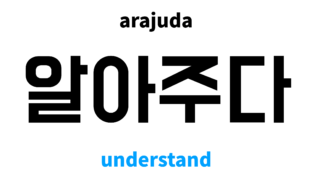
understand in Korean: 알아주다’s meaning and pronunciation

understand in Korean is 알아주다. For examples, you can use like [마음을 알아주는 친구, 기분을 알아주다]. In this post you will learn how to pronounce and use understand in Korean along with examples.

Intermediate Words

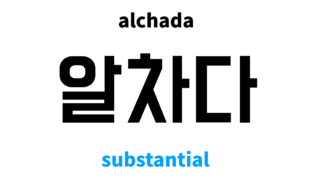
substantial in Korean: 알차다’s meaning and pronunciation

substantial in Korean is 알차다. For examples, you can use like [알찬 시간, 알찬 열매]. In this post you will learn how to pronounce and use substantial in Korean along with examples.
Intermediate Words

be sick in Korean: 앓다’s meaning and pronunciation

be sick in Korean is 앓다. For examples, you can use like [감기를 앓다, 몸살을 앓다]. In this post you will learn how to pronounce and use be sick in Korean along with examples.
Intermediate Words

cancer in Korean: 암’s meaning and pronunciation

cancer in Korean is 암. For examples, you can use like [초기 암, 암 검사]. In this post you will learn how to pronounce and use cancer in Korean along with examples.
Intermediate Words

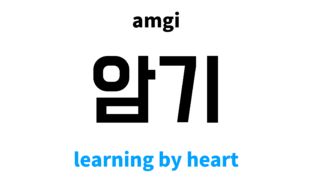
learning by heart in Korean: 암기’s meaning and pronunciation

learning by heart in Korean is 암기. For examples, you can use like [단순 암기, 단어 암기]. In this post you will learn how to pronounce and use learning by heart in Korean along with examples.
Intermediate Words

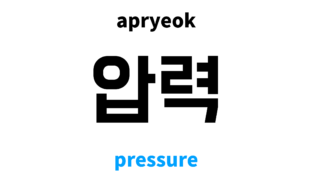
pressure in Korean: 압력’s meaning and pronunciation

pressure in Korean is 압력. For examples, you can use like [허용 압력, 압력 차이]. In this post you will learn how to pronounce and use pressure in Korean along with examples.
Intermediate Words

eek in Korean: 앗’s meaning and pronunciation

eek in Korean is 앗. For examples, you can use like [앗! 깜짝이야, 앗! 뜨거워]. In this post you will learn how to pronounce and use eek in Korean along with examples.
Intermediate Words

front path in Korean: 앞길’s meaning and pronunciation

front path in Korean is 앞길. For examples, you can use like [가게 앞길, 골목 앞길]. In this post you will learn how to pronounce and use front path in Korean along with examples.
Intermediate Words

future in Korean: 앞날’s meaning and pronunciation

future in Korean is 앞날. For examples, you can use like [앞날이 걱정되다, 앞날이 다가오다]. In this post you will learn how to pronounce and use future in Korean along with examples.
Copied title and URL