mylingo

Intermediate Words

check in Korean: 수표’s meaning and pronunciation

check in Korean is 수표. For examples, you can use like [수표 한 장, 수표를 내다]. In this post you will learn how to pronounce and use check in Korean along with examples.
Intermediate Words

lady in Korean: 숙녀’s meaning and pronunciation

lady in Korean is 숙녀. For examples, you can use like [우아한 숙녀, 신사와 숙녀]. In this post you will learn how to pronounce and use lady in Korean along with examples.
Intermediate Words

lodging in Korean: 숙박’s meaning and pronunciation

lodging in Korean is 숙박. For examples, you can use like [숙박 시설, 숙박 업소]. In this post you will learn how to pronounce and use lodging in Korean along with examples.
Intermediate Words

room charge in Korean: 숙박비’s meaning and pronunciation

room charge in Korean is 숙박비. For examples, you can use like [여관의 숙박비, 호텔의 숙박비]. In this post you will learn how to pronounce and use room charge in Korean along with examples.
Intermediate Words

lodging in Korean: 숙소’s meaning and pronunciation

lodging in Korean is 숙소. For examples, you can use like [숙소를 예약하다, 숙소를 잡다]. In this post you will learn how to pronounce and use lodging in Korean along with examples.
Intermediate Words

bow in Korean: 숙이다’s meaning and pronunciation

bow in Korean is 숙이다. For examples, you can use like [고개를 숙이다, 머리를 숙이다]. In this post you will learn how to pronounce and use bow in Korean along with examples.
Intermediate Words

faucet in Korean: 수도꼭지’s meaning and pronunciation

faucet in Korean is 수도꼭지. For examples, you can use like [수도꼭지를 잠그다, 수도꼭지를 틀다]. In this post you will learn how to pronounce and use faucet in Korean along with examples.
Intermediate Words

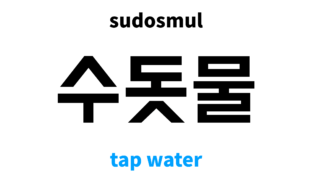
tap water in Korean: 수돗물’s meaning and pronunciation

tap water in Korean is 수돗물. For examples, you can use like [수돗물이 공급되다, 수돗물을 끓이다]. In this post you will learn how to pronounce and use tap water in Korean along with examples.
Intermediate Words

being passive in Korean: 수동적’s meaning and pronunciation

being passive in Korean is 수동적. For examples, you can use like [수동적인 면, 수동적인 성격]. In this post you will learn how to pronounce and use being passive in Korean along with examples.
Intermediate Words

amount in Korean: 수량’s meaning and pronunciation

amount in Korean is 수량. For examples, you can use like [수량이 부족하다, 수량이 충분하다]. In this post you will learn how to pronounce and use amount in Korean along with examples.
Copied title and URL