mylingo

Intermediate Words

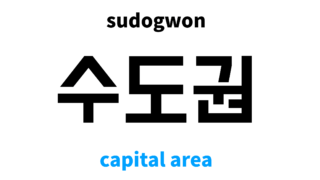
capital area in Korean: 수도권’s meaning and pronunciation

capital area in Korean is 수도권. For examples, you can use like [수도권 개발, 수도권 전철]. In this post you will learn how to pronounce and use capital area in Korean along with examples.
Intermediate Words

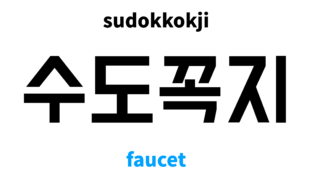
faucet in Korean: 수도꼭지’s meaning and pronunciation

faucet in Korean is 수도꼭지. For examples, you can use like [수도꼭지를 잠그다, 수도꼭지를 틀다]. In this post you will learn how to pronounce and use faucet in Korean along with examples.
Intermediate Words

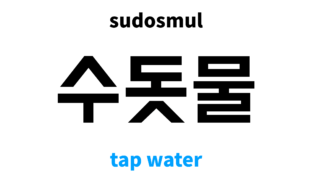
tap water in Korean: 수돗물’s meaning and pronunciation

tap water in Korean is 수돗물. For examples, you can use like [수돗물이 공급되다, 수돗물을 끓이다]. In this post you will learn how to pronounce and use tap water in Korean along with examples.
Intermediate Words

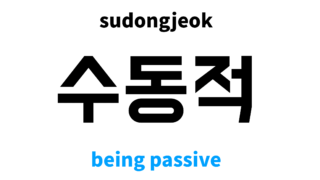
being passive in Korean: 수동적’s meaning and pronunciation

being passive in Korean is 수동적. For examples, you can use like [수동적인 면, 수동적인 성격]. In this post you will learn how to pronounce and use being passive in Korean along with examples.
Intermediate Words

amount in Korean: 수량’s meaning and pronunciation

amount in Korean is 수량. For examples, you can use like [수량이 부족하다, 수량이 충분하다]. In this post you will learn how to pronounce and use amount in Korean along with examples.
Intermediate Words

repair cost in Korean: 수리비’s meaning and pronunciation

repair cost in Korean is 수리비. For examples, you can use like [자동차 수리비, 수리비가 나오다]. In this post you will learn how to pronounce and use repair cost in Korean along with examples.
Intermediate Words

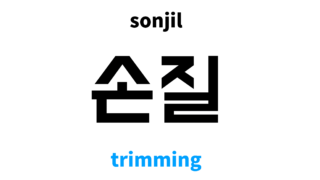
trimming in Korean: 손질’s meaning and pronunciation

trimming in Korean is 손질. For examples, you can use like [머리 손질, 손톱 손질]. In this post you will learn how to pronounce and use trimming in Korean along with examples.
Intermediate Words

nail in Korean: 손톱’s meaning and pronunciation

nail in Korean is 손톱. For examples, you can use like [긴 손톱, 날카로운 손톱]. In this post you will learn how to pronounce and use nail in Korean along with examples.
Intermediate Words

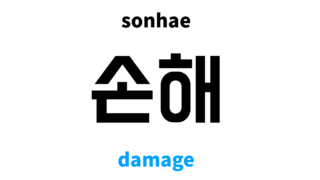
damage in Korean: 손해’s meaning and pronunciation

damage in Korean is 손해. For examples, you can use like [손해가 나다, 손해가 생기다]. In this post you will learn how to pronounce and use damage in Korean along with examples.
Intermediate Words

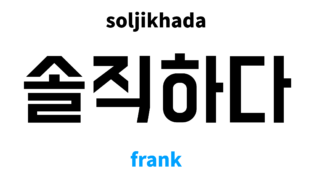
frank in Korean: 솔직하다’s meaning and pronunciation

frank in Korean is 솔직하다. For examples, you can use like [솔직한 대답, 솔직한 모습]. In this post you will learn how to pronounce and use frank in Korean along with examples.
Copied title and URL