mylingo

Intermediate Words

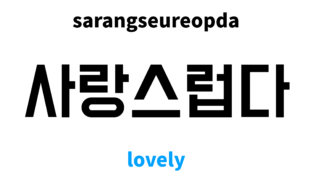
lovely in Korean: 사랑스럽다’s meaning and pronunciation

lovely in Korean is 사랑스럽다. For examples, you can use like [사랑스러운 강아지, 사랑스러운 고양이]. In this post you will learn how to pronounce and use lovely in Korean along with examples.
Intermediate Words

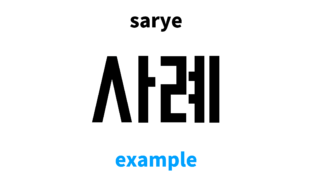
example in Korean: 사례’s meaning and pronunciation

example in Korean is 사례. For examples, you can use like [모범 사례, 성공 사례]. In this post you will learn how to pronounce and use example in Korean along with examples.
Intermediate Words

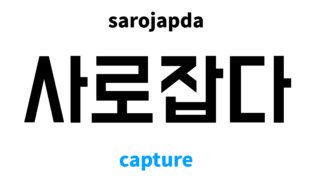
capture in Korean: 사로잡다’s meaning and pronunciation

capture in Korean is 사로잡다. For examples, you can use like [사냥감을 사로잡다, 사자를 사로잡다]. In this post you will learn how to pronounce and use capture in Korean along with examples.
Intermediate Words

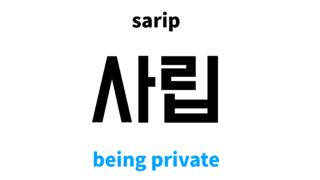
being private in Korean: 사립’s meaning and pronunciation

being private in Korean is 사립. For examples, you can use like [사립 기관, 사립 미술관]. In this post you will learn how to pronounce and use being private in Korean along with examples.
Intermediate Words

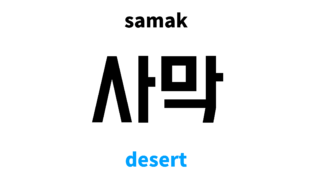
desert in Korean: 사막’s meaning and pronunciation

desert in Korean is 사막. For examples, you can use like [무더운 사막, 사막의 모래]. In this post you will learn how to pronounce and use desert in Korean along with examples.
Intermediate Words

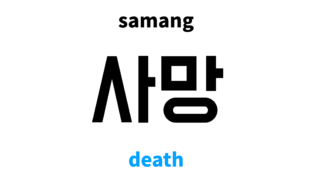
death in Korean: 사망’s meaning and pronunciation

death in Korean is 사망. For examples, you can use like [갑작스러운 사망, 사망 소식]. In this post you will learn how to pronounce and use death in Korean along with examples.
Intermediate Words

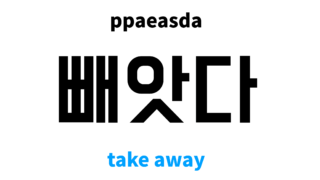
take away in Korean: 빼앗다’s meaning and pronunciation

take away in Korean is 빼앗다. For examples, you can use like [돈을 빼앗다, 물건을 빼앗다]. In this post you will learn how to pronounce and use take away in Korean along with examples.
Intermediate Words

snatch in Korean: 뺏다’s meaning and pronunciation

snatch in Korean is 뺏다. For examples, you can use like [돈을 뺏다, 물건을 뺏다]. In this post you will learn how to pronounce and use snatch in Korean along with examples.
Intermediate Words

cheek in Korean: 뺨’s meaning and pronunciation

cheek in Korean is 뺨. For examples, you can use like [뺨이 불그스레하다, 뺨이 홀쭉하다]. In this post you will learn how to pronounce and use cheek in Korean along with examples.
Intermediate Words

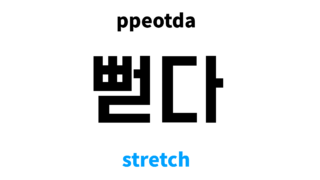
stretch in Korean: 뻗다’s meaning and pronunciation

stretch in Korean is 뻗다. For examples, you can use like [가지가 뻗다, 덩굴이 뻗다]. In this post you will learn how to pronounce and use stretch in Korean along with examples.
Copied title and URL