mylingo

Intermediate Words

start in Korean: 비롯하다’s meaning and pronunciation

start in Korean is 비롯하다. For examples, you can use like [비롯한 사건, 비롯한 일]. In this post you will learn how to pronounce and use start in Korean along with examples.
Intermediate Words

obesity in Korean: 비만’s meaning and pronunciation

obesity in Korean is 비만. For examples, you can use like [비만 아동, 비만 클리닉]. In this post you will learn how to pronounce and use obesity in Korean along with examples.
Intermediate Words

password in Korean: 비밀번호’s meaning and pronunciation

password in Korean is 비밀번호. For examples, you can use like [비밀번호 등록, 비밀번호가 유출되다]. In this post you will learn how to pronounce and use password in Korean along with examples.
Intermediate Words

rain and wind in Korean: 비바람’s meaning and pronunciation

rain and wind in Korean is 비바람. For examples, you can use like [비바람을 겪다, 비바람을 견디다]. In this post you will learn how to pronounce and use rain and wind in Korean along with examples.
Intermediate Words

secret in Korean: 비법’s meaning and pronunciation

secret in Korean is 비법. For examples, you can use like [나만의 비법, 기묘한 비법]. In this post you will learn how to pronounce and use secret in Korean along with examples.
Intermediate Words

rub in Korean: 비비다’s meaning and pronunciation

rub in Korean is 비비다. For examples, you can use like [눈을 비비다, 손을 비비다]. In this post you will learn how to pronounce and use rub in Korean along with examples.
Intermediate Words

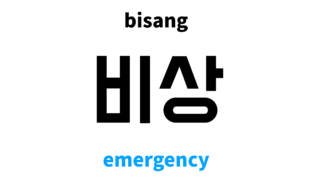
emergency in Korean: 비상’s meaning and pronunciation

emergency in Korean is 비상. For examples, you can use like [비상 수단, 비상 조치]. In this post you will learn how to pronounce and use emergency in Korean along with examples.
Intermediate Words

emergency exit in Korean: 비상구’s meaning and pronunciation

emergency exit in Korean is 비상구. For examples, you can use like [비상구 표시등, 비상구를 마련하다]. In this post you will learn how to pronounce and use emergency exit in Korean along with examples.
Intermediate Words

unusual in Korean: 비상하다’s meaning and pronunciation

unusual in Korean is 비상하다. For examples, you can use like [비상한 각오, 비상한 노력]. In this post you will learn how to pronounce and use unusual in Korean along with examples.
Intermediate Words

cost in Korean: 비용’s meaning and pronunciation

cost in Korean is 비용. For examples, you can use like [가입 비용, 거래 비용]. In this post you will learn how to pronounce and use cost in Korean along with examples.
Copied title and URL