mylingo

Intermediate Words

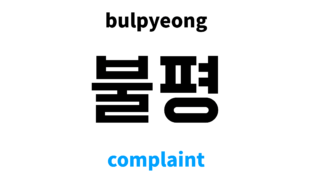
complaint in Korean: 불평’s meaning and pronunciation

complaint in Korean is 불평. For examples, you can use like [불평이 많다, 불평이 이만저만이 아니다]. In this post you will learn how to pronounce and use complaint in Korean along with examples.
Intermediate Words

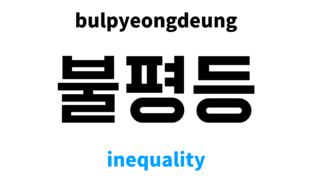
inequality in Korean: 불평등’s meaning and pronunciation

inequality in Korean is 불평등. For examples, you can use like [교육 불평등, 남녀 불평등]. In this post you will learn how to pronounce and use inequality in Korean along with examples.
Intermediate Words

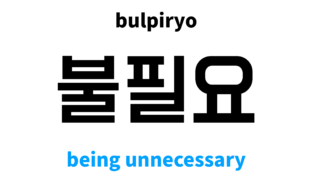
being unnecessary in Korean: 불필요’s meaning and pronunciation

being unnecessary in Korean is 불필요. For examples, you can use like [검사 불필요, 경력 불필요]. In this post you will learn how to pronounce and use being unnecessary in Korean along with examples.
Intermediate Words

unhapiness in Korean: 불행’s meaning and pronunciation

unhapiness in Korean is 불행. For examples, you can use like [가족의 불행, 불행의 예감]. In this post you will learn how to pronounce and use unhapiness in Korean along with examples.
Intermediate Words

being uncertain in Korean: 불확실’s meaning and pronunciation

being uncertain in Korean is 불확실. For examples, you can use like [불확실 상태, 불확실 요인]. In this post you will learn how to pronounce and use being uncertain in Korean along with examples.
Intermediate Words

be crowded in Korean: 붐비다’s meaning and pronunciation

be crowded in Korean is 붐비다. For examples, you can use like [붐비는 도로, 기차역이 붐비다]. In this post you will learn how to pronounce and use be crowded in Korean along with examples.
Intermediate Words

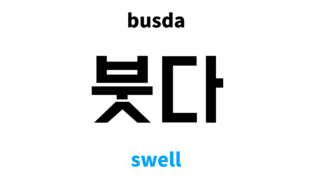
swell in Korean: 붓다’s meaning and pronunciation

swell in Korean is 붓다. For examples, you can use like [부은 얼굴, 눈이 붓다]. In this post you will learn how to pronounce and use swell in Korean along with examples.
Intermediate Words

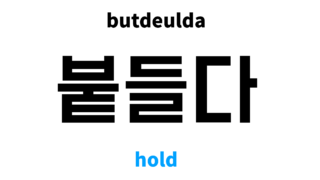
hold in Korean: 붙들다’s meaning and pronunciation

hold in Korean is 붙들다. For examples, you can use like [붙드는 전화기, 다리를 붙들다]. In this post you will learn how to pronounce and use hold in Korean along with examples.
Intermediate Words

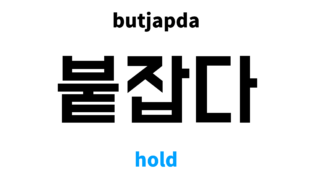
hold in Korean: 붙잡다’s meaning and pronunciation

hold in Korean is 붙잡다. For examples, you can use like [손을 붙잡다, 붙잡은 손잡이]. In this post you will learn how to pronounce and use hold in Korean along with examples.
Intermediate Words

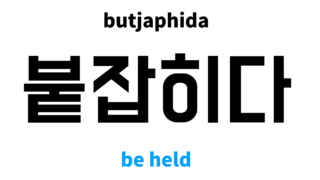
be held in Korean: 붙잡히다’s meaning and pronunciation

be held in Korean is 붙잡히다. For examples, you can use like [붙잡힌 옷자락, 바짓가랑이가 붙잡히다]. In this post you will learn how to pronounce and use be held in Korean along with examples.
Copied title and URL