mylingo

Intermediate Words

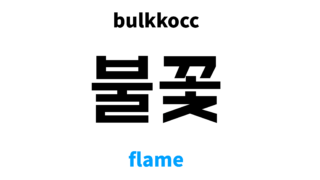
flame in Korean: 불꽃’s meaning and pronunciation

flame in Korean is 불꽃. For examples, you can use like [빨간 불꽃, 타오르는 불꽃]. In this post you will learn how to pronounce and use flame in Korean along with examples.
Intermediate Words

arouse in Korean: 불러일으키다’s meaning and pronunciation

arouse in Korean is 불러일으키다. For examples, you can use like [불러일으킨 갈등, 감동을 불러일으키다]. In this post you will learn how to pronounce and use arouse in Korean along with examples.
Intermediate Words

disadvantage in Korean: 불리’s meaning and pronunciation

disadvantage in Korean is 불리. For examples, you can use like [요건 불리, 입장 불리]. In this post you will learn how to pronounce and use disadvantage in Korean along with examples.
Intermediate Words

dissatisfaction in Korean: 불만’s meaning and pronunciation

dissatisfaction in Korean is 불만. For examples, you can use like [불만 사항, 불만이 가득하다]. In this post you will learn how to pronounce and use dissatisfaction in Korean along with examples.
Intermediate Words

dissatisfaction in Korean: 불만족’s meaning and pronunciation

dissatisfaction in Korean is 불만족. For examples, you can use like [불만족 사항, 불만족을 나타내다]. In this post you will learn how to pronounce and use dissatisfaction in Korean along with examples.
Intermediate Words

rather unsatisfied in Korean: 불만족스럽다’s meaning and pronunciation

rather unsatisfied in Korean is 불만족스럽다. For examples, you can use like [불만족스러운 사항, 불만족스러운 얼굴]. In this post you will learn how to pronounce and use rather unsatisfied in Korean along with examples.
Intermediate Words

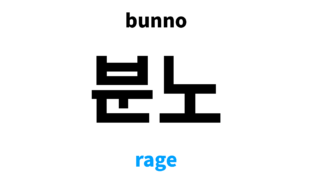
rage in Korean: 분노’s meaning and pronunciation

rage in Korean is 분노. For examples, you can use like [분노가 가라앉다, 분노가 끓어오르다]. In this post you will learn how to pronounce and use rage in Korean along with examples.
Intermediate Words

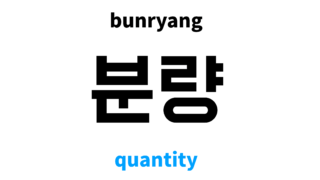
quantity in Korean: 분량’s meaning and pronunciation

quantity in Korean is 분량. For examples, you can use like [일 회 분량, 분량이 늘다]. In this post you will learn how to pronounce and use quantity in Korean along with examples.
Intermediate Words

sorting in Korean: 분류’s meaning and pronunciation

sorting in Korean is 분류. For examples, you can use like [도서 분류, 장르별 분류]. In this post you will learn how to pronounce and use sorting in Korean along with examples.
Intermediate Words

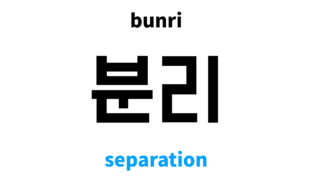
separation in Korean: 분리’s meaning and pronunciation

separation in Korean is 분리. For examples, you can use like [분리 현상, 분리가 되다]. In this post you will learn how to pronounce and use separation in Korean along with examples.
Copied title and URL