mylingo

Intermediate Words

change in Korean: 변화’s meaning and pronunciation

change in Korean is 변화. For examples, you can use like [온도 변화, 계절의 변화]. In this post you will learn how to pronounce and use change in Korean along with examples.
Intermediate Words

particular in Korean: 별다르다’s meaning and pronunciation

particular in Korean is 별다르다. For examples, you can use like [별다른 노력, 별다른 마찰]. In this post you will learn how to pronounce and use particular in Korean along with examples.
Intermediate Words

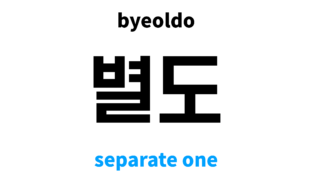
separate one in Korean: 별도’s meaning and pronunciation

separate one in Korean is 별도. For examples, you can use like [별도의 기준, 별도의 수입]. In this post you will learn how to pronounce and use separate one in Korean along with examples.
Intermediate Words

particular remark in Korean: 별말씀’s meaning and pronunciation

particular remark in Korean is 별말씀. For examples, you can use like [별말씀이 없으시다, 별말씀을 안 하시다]. In this post you will learn how to pronounce and use particular remark in Korean along with examples.
Intermediate Words

nickname in Korean: 별명’s meaning and pronunciation

nickname in Korean is 별명. For examples, you can use like [별명을 부르다, 별명을 붙이다]. In this post you will learn how to pronounce and use nickname in Korean along with examples.
Intermediate Words

odd thing in Korean: 별일’s meaning and pronunciation

odd thing in Korean is 별일. For examples, you can use like [별일을 다 겪다, 별일을 다 당하다]. In this post you will learn how to pronounce and use odd thing in Korean along with examples.
Intermediate Words

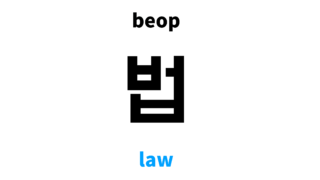
law in Korean: 법’s meaning and pronunciation

law in Korean is 법. For examples, you can use like [법의 개정, 법의 권위]. In this post you will learn how to pronounce and use law in Korean along with examples.
Intermediate Words

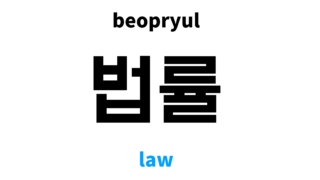
law in Korean: 법률’s meaning and pronunciation

law in Korean is 법률. For examples, you can use like [엄격한 법률, 법률이 까다롭다]. In this post you will learn how to pronounce and use law in Korean along with examples.
Intermediate Words

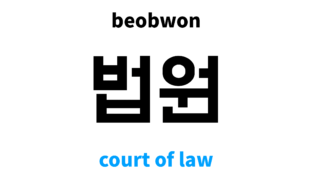
court of law in Korean: 법원’s meaning and pronunciation

court of law in Korean is 법원. For examples, you can use like [법원에 출두하다, 법원에서 일하다]. In this post you will learn how to pronounce and use court of law in Korean along with examples.
Intermediate Words

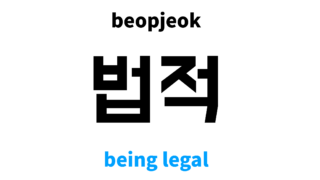
being legal in Korean: 법적’s meaning and pronunciation

being legal in Korean is 법적. For examples, you can use like [법적인 문제, 법적인 제약]. In this post you will learn how to pronounce and use being legal in Korean along with examples.
Copied title and URL