mylingo

Intermediate Words

being unexpected in Korean: 뜻밖’s meaning and pronunciation

being unexpected in Korean is 뜻밖. For examples, you can use like [뜻밖의 말, 뜻밖의 비밀]. In this post you will learn how to pronounce and use being unexpected in Korean along with examples.

Intermediate Words

unexpectedly in Korean: 뜻밖에’s meaning and pronunciation

unexpectedly in Korean is 뜻밖에. For examples, you can use like [뜻밖에 나타나다, 뜻밖에 마주치다]. In this post you will learn how to pronounce and use unexpectedly in Korean along with examples.
Intermediate Words

be seen in Korean: 띄다’s meaning and pronunciation

be seen in Korean is 띄다. For examples, you can use like [배려가 눈에 띄다, 변화가 눈에 띄다]. In this post you will learn how to pronounce and use be seen in Korean along with examples.
Intermediate Words

belt in Korean: 띠’s meaning and pronunciation

belt in Korean is 띠. For examples, you can use like [흰 띠, 띠를 두르다]. In this post you will learn how to pronounce and use belt in Korean along with examples.
Intermediate Words

put on in Korean: 띠다’s meaning and pronunciation

put on in Korean is 띠다. For examples, you can use like [끈을 띠다, 허리띠를 띠다]. In this post you will learn how to pronounce and use put on in Korean along with examples.
Intermediate Words

amount in Korean: 량’s meaning and pronunciation

amount in Korean is 량. For examples, you can use like [강설량, 강수량]. In this post you will learn how to pronounce and use amount in Korean along with examples.
Intermediate Words

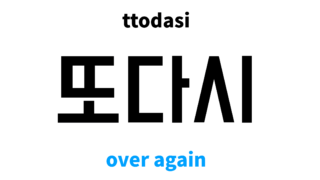
over again in Korean: 또다시’s meaning and pronunciation

over again in Korean is 또다시. For examples, you can use like [또다시 강조하다, 또다시 말하다]. In this post you will learn how to pronounce and use over again in Korean along with examples.
Intermediate Words

definitely in Korean: 똑똑히’s meaning and pronunciation

definitely in Korean is 똑똑히. For examples, you can use like [똑똑히 기억하다, 똑똑히 듣다]. In this post you will learn how to pronounce and use definitely in Korean along with examples.
Intermediate Words

feces in Korean: 똥’s meaning and pronunciation

feces in Korean is 똥. For examples, you can use like [더러운 똥, 똥이 급하다]. In this post you will learn how to pronounce and use feces in Korean along with examples.
Intermediate Words

lid in Korean: 뚜껑’s meaning and pronunciation

lid in Korean is 뚜껑. For examples, you can use like [그릇 뚜껑, 냄비 뚜껑]. In this post you will learn how to pronounce and use lid in Korean along with examples.

Copied title and URL