mylingo

Intermediate Words

old in Korean: 낡다’s meaning and pronunciation

old in Korean is 낡다. For examples, you can use like [낡고 허름하다, 낡아서 버리다]. In this post you will learn how to pronounce and use old in Korean along with examples.
Intermediate Words

male in Korean: 남’s meaning and pronunciation

male in Korean is 남. For examples, you can use like [남과 여, 남남 북녀]. In this post you will learn how to pronounce and use male in Korean along with examples.
Intermediate Words

south in Korean: 남’s meaning and pronunciation

south in Korean is 남. For examples, you can use like [남과 북, 남으로 가다]. In this post you will learn how to pronounce and use south in Korean along with examples.
Intermediate Words

brother and sister in Korean: 남매’s meaning and pronunciation

brother and sister in Korean is 남매. For examples, you can use like [쌍둥이 남매, 우리 남매]. In this post you will learn how to pronounce and use brother and sister in Korean along with examples.
Intermediate Words

South America in Korean: 남미’s meaning and pronunciation

South America in Korean is 남미. For examples, you can use like [남미 대륙, 남미 여행]. In this post you will learn how to pronounce and use South America in Korean along with examples.
Intermediate Words

southern part in Korean: 남부’s meaning and pronunciation

southern part in Korean is 남부. For examples, you can use like [강원도 남부, 경기도 남부]. In this post you will learn how to pronounce and use southern part in Korean along with examples.
Intermediate Words

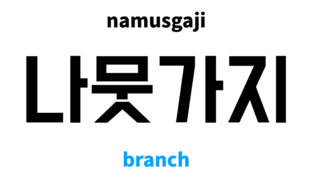
branch in Korean: 나뭇가지’s meaning and pronunciation

branch in Korean is 나뭇가지. For examples, you can use like [마른 나뭇가지, 부러진 나뭇가지]. In this post you will learn how to pronounce and use branch in Korean along with examples.
Intermediate Words

leaf in Korean: 나뭇잎’s meaning and pronunciation

leaf in Korean is 나뭇잎. For examples, you can use like [단풍이 든 나뭇잎, 마른 나뭇잎]. In this post you will learn how to pronounce and use leaf in Korean along with examples.
Intermediate Words

get worse in Korean: 나빠지다’s meaning and pronunciation

get worse in Korean is 나빠지다. For examples, you can use like [건강이 나빠지다, 기분이 나빠지다]. In this post you will learn how to pronounce and use get worse in Korean along with examples.
Intermediate Words

come out in Korean: 나서다’s meaning and pronunciation

come out in Korean is 나서다. For examples, you can use like [거리에 나서다, 문밖에 나서다]. In this post you will learn how to pronounce and use come out in Korean along with examples.
Copied title and URL