mylingo

Intermediate Words

worried in Korean: 걱정스럽다’s meaning and pronunciation

worried in Korean is 걱정스럽다. For examples, you can use like [걱정스러운 눈, 걱정스러운 일]. In this post you will learn how to pronounce and use worried in Korean along with examples.

Intermediate Words

opposite side in Korean: 건너’s meaning and pronunciation

opposite side in Korean is 건너. For examples, you can use like [강 건너, 길 건너]. In this post you will learn how to pronounce and use opposite side in Korean along with examples.

Intermediate Words

railroad crossing in Korean: 건널목’s meaning and pronunciation

railroad crossing in Korean is 건널목. For examples, you can use like [건널목 신호음, 건널목 차단기]. In this post you will learn how to pronounce and use railroad crossing in Korean along with examples.
Intermediate Words

pass over in Korean: 건네다’s meaning and pronunciation

pass over in Korean is 건네다. For examples, you can use like [돈을 건네다, 봉투를 건네다]. In this post you will learn how to pronounce and use pass over in Korean along with examples.
Intermediate Words

pass over in Korean: 건네주다’s meaning and pronunciation

pass over in Korean is 건네주다. For examples, you can use like [돈을 건네주다, 봉투를 건네주다]. In this post you will learn how to pronounce and use pass over in Korean along with examples.
Intermediate Words

touch in Korean: 건드리다’s meaning and pronunciation

touch in Korean is 건드리다. For examples, you can use like [몸을 건드리다, 물건을 건드리다]. In this post you will learn how to pronounce and use touch in Korean along with examples.
Intermediate Words

each person in Korean: 개인’s meaning and pronunciation

each person in Korean is 개인. For examples, you can use like [개인 생활, 개인 자격]. In this post you will learn how to pronounce and use each person in Korean along with examples.
Intermediate Words

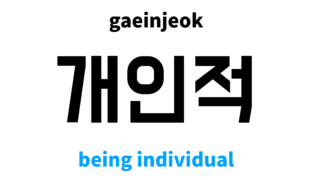
being individual in Korean: 개인적’s meaning and pronunciation

being individual in Korean is 개인적. For examples, you can use like [개인적인 사정, 개인적인 일]. In this post you will learn how to pronounce and use being individual in Korean along with examples.
Intermediate Words

hosting in Korean: 개최’s meaning and pronunciation

hosting in Korean is 개최. For examples, you can use like [공동 개최, 개최 경쟁]. In this post you will learn how to pronounce and use hosting in Korean along with examples.
Intermediate Words

reform in Korean: 개혁’s meaning and pronunciation

reform in Korean is 개혁. For examples, you can use like [경제 개혁, 경찰 개혁]. In this post you will learn how to pronounce and use reform in Korean along with examples.
Copied title and URL