mylingo

Intermediate Words

ant in Korean: 개미’s meaning and pronunciation

ant in Korean is 개미. For examples, you can use like [개미들의 행렬, 개미가 기어 다니다]. In this post you will learn how to pronounce and use ant in Korean along with examples.
Intermediate Words

development in Korean: 개발’s meaning and pronunciation

development in Korean is 개발. For examples, you can use like [국토 개발, 수자원 개발]. In this post you will learn how to pronounce and use development in Korean along with examples.
Intermediate Words

opening in Korean: 개방’s meaning and pronunciation

opening in Korean is 개방. For examples, you can use like [등산로 개방, 무료 개방]. In this post you will learn how to pronounce and use opening in Korean along with examples.
Intermediate Words

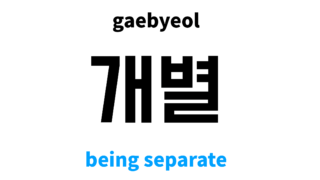
being separate in Korean: 개별’s meaning and pronunciation

being separate in Korean is 개별. For examples, you can use like [개별 면접, 개별 분야]. In this post you will learn how to pronounce and use being separate in Korean along with examples.
Intermediate Words

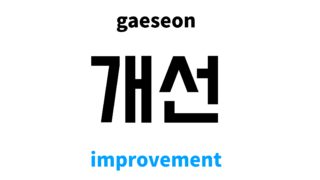
improvement in Korean: 개선’s meaning and pronunciation

improvement in Korean is 개선. For examples, you can use like [관계 개선, 구조 개선]. In this post you will learn how to pronounce and use improvement in Korean along with examples.
Intermediate Words

characteristic in Korean: 개성’s meaning and pronunciation

characteristic in Korean is 개성. For examples, you can use like [다양한 개성, 독특한 개성]. In this post you will learn how to pronounce and use characteristic in Korean along with examples.
Intermediate Words

each person in Korean: 개인’s meaning and pronunciation

each person in Korean is 개인. For examples, you can use like [개인 생활, 개인 자격]. In this post you will learn how to pronounce and use each person in Korean along with examples.
Intermediate Words

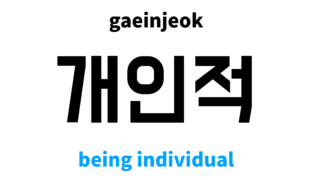
being individual in Korean: 개인적’s meaning and pronunciation

being individual in Korean is 개인적. For examples, you can use like [개인적인 사정, 개인적인 일]. In this post you will learn how to pronounce and use being individual in Korean along with examples.
Intermediate Words

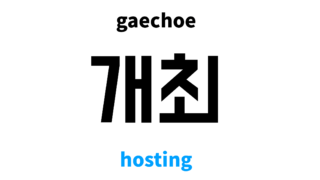
hosting in Korean: 개최’s meaning and pronunciation

hosting in Korean is 개최. For examples, you can use like [공동 개최, 개최 경쟁]. In this post you will learn how to pronounce and use hosting in Korean along with examples.
Intermediate Words

reform in Korean: 개혁’s meaning and pronunciation

reform in Korean is 개혁. For examples, you can use like [경제 개혁, 경찰 개혁]. In this post you will learn how to pronounce and use reform in Korean along with examples.
Copied title and URL