mylingo

Basic ㄷ

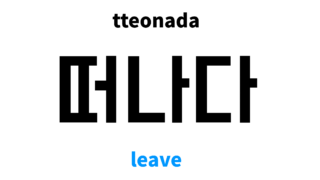
Leave in Korean: 떠나다’s meaning and pronunciation

Leave in Korean is 떠나다. For examples, you can use like [먼 곳으로 떠나다, 새로운 곳으로 떠나다]. In this post you will learn how to pronounce and use Leave in Korean along with examples.
Basic ㄷ
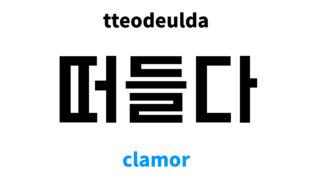
Clamor in Korean: 떠들다’s meaning and pronunciation

Clamor in Korean is 떠들다. For examples, you can use like [떠드는 사람, 떠드는 소리]. In this post you will learn how to pronounce and use Clamor in Korean along with examples.
Basic ㄷ

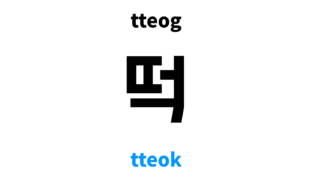
Tteok in Korean: 떡’s meaning and pronunciation

Tteok in Korean is 떡. For examples, you can use like [잔치 떡, 축하 떡]. In this post you will learn how to pronounce and use Tteok in Korean along with examples.
Basic ㄷ

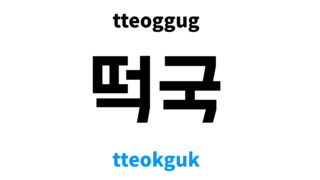
Tteokguk in Korean: 떡국’s meaning and pronunciation

Tteokguk in Korean is 떡국. For examples, you can use like [떡국 한 그릇, 떡국과 만두]. In this post you will learn how to pronounce and use Tteokguk in Korean along with examples.
Basic ㄷ

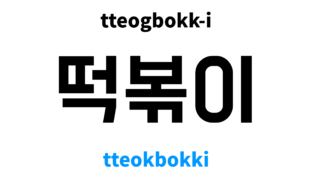
Tteokbokki in Korean: 떡볶이’s meaning and pronunciation

Tteokbokki in Korean is 떡볶이. For examples, you can use like [떡볶이 장사, 떡볶이 일 인분]. In this post you will learn how to pronounce and use Tteokbokki in Korean along with examples.
Basic ㄷ

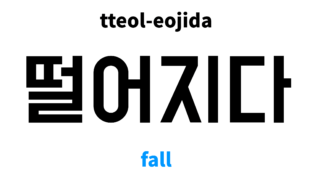
Fall in Korean: 떨어지다’s meaning and pronunciation

Fall in Korean is 떨어지다. For examples, you can use like [눈이 떨어지다, 물이 떨어지다]. In this post you will learn how to pronounce and use Fall in Korean along with examples.
Basic ㄷ

Second in Korean: 둘째’s meaning and pronunciation

Second in Korean is 둘째. For examples, you can use like [둘째 딸, 둘째가라면 서럽다]. In this post you will learn how to pronounce and use Second in Korean along with examples.
Basic ㄷ

Back in Korean: 뒤’s meaning and pronunciation

Back in Korean is 뒤. For examples, you can use like [뒤로 물러서다, 내 뒤로 줄을 서주세요]. In this post you will learn how to pronounce and use Back in Korean along with examples.
Basic ㄷ

Back in Korean: 뒤쪽’s meaning and pronunciation

Back in Korean is 뒤쪽. For examples, you can use like [뒤쪽에 앉다, 뒤쪽 좌석]. In this post you will learn how to pronounce and use Back in Korean along with examples.
Basic ㄷ

At Last in Korean: 드디어’s meaning and pronunciation

At Last in Korean is 드디어. For examples, you can use like [드디어 결정되다, 드디어 끝나다]. In this post you will learn how to pronounce and use At Last in Korean along with examples.
Copied title and URL